Part 6 of the series → start at the Period-End Closing overview.
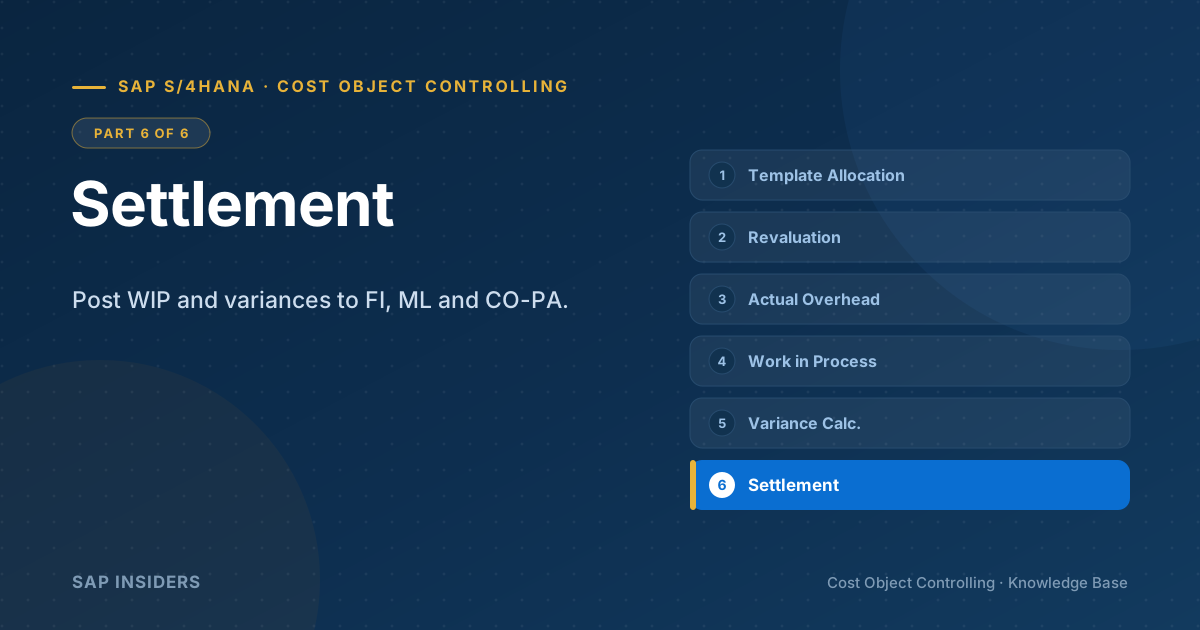
The final step posts everything the close has prepared. Settlement moves WIP to Financial Accounting, books the order balance to the Material Ledger, and sends variance categories to CO-PA — turning controlling figures into financial postings.
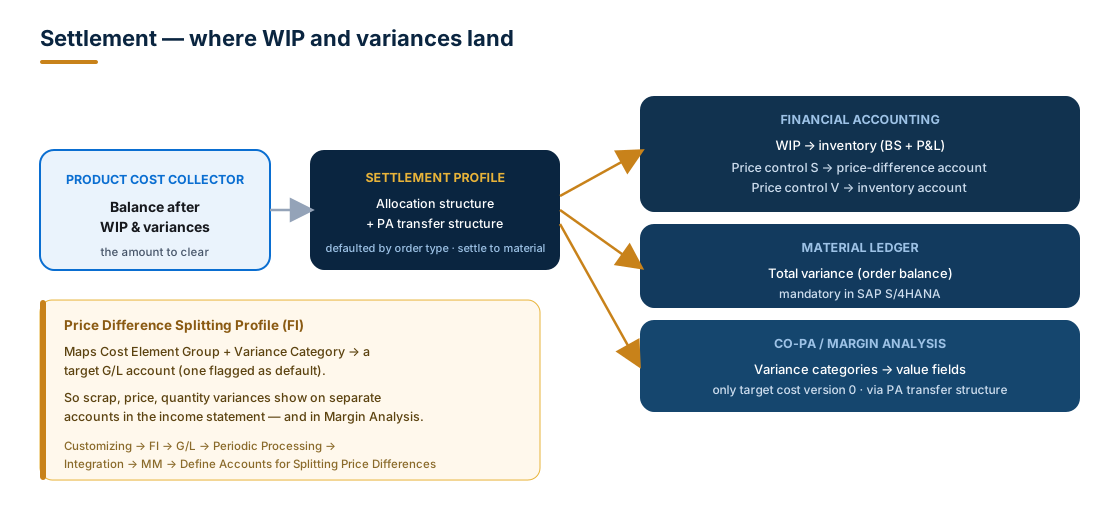
What settlement posts
- Work in process → FI. WIP is transferred to Financial Accounting as unfinished-goods inventory (balance sheet and P&L).
- The order balance / total variance. With price control S (standard price), settlement debits the price-difference account and credits inventory change. With price control V (moving average), it debits the inventory account instead. Either way, the total variance is updated in the Material Ledger — mandatory in SAP S/4HANA.
- Variance categories → CO-PA. Only the variances from target cost version 0 are relevant for settlement to costing-based CO-PA; value fields are assigned per category and cost element in Customizing.
The configuration behind it
The settlement profile (defaulted by the order type) must allow settlement to a material, and — to reach CO-PA — must have the variances indicator set and allow settlement to a profitability segment. It proposes two structures:
- Allocation structure — settles price differences to FI (and CO-PA); actual data for both updates table
ACDOCA. The price-difference (PRD) G/L account comes from automatic account assignment (transaction OMWB). - PA transfer structure — controls how variance categories map to value fields in costing-based CO-PA, optionally splitting by cost element, by category, or by fixed/variable portion.
Splitting price differences by category
By default a variance lands on a single PRD account. The Price Difference Splitting Profile (Customizing → FI → G/L → Periodic Processing → Integration → MM → Define Accounts for Splitting Price Differences) maps Cost Element Group + Variance Category → a target G/L account (one flagged as default). The payoff: scrap, price and quantity variances appear on separate accounts in both the income statement and Margin Analysis, so the financial statements explain why production differed from plan.
In CO-PA you can distinguish fixed from variable portions of a variance; in FI and Margin Analysis you cannot. Detailed variance analysis usually belongs in the Cost Object Controlling information system, not CO-PA.
Why it matters
Settlement is where the whole close becomes real money: inventory is stated correctly, the ledger balances, and margins reflect actual production performance — category by category. Get the settlement profile, allocation structure and splitting profile right and your month-end story is both accurate and explainable.
The full series
- Template Allocation
- Revaluation at Actual Prices
- Actual Overhead Calculation
- Calculating Work in Process (WIP)
- Variance Calculation
- Settlement — you are here
That completes the close: from the costs that gathered on the collector to inventory in FI, a balance in the Material Ledger, and a margin story in CO-PA.