In Product Cost by Period, a product cost collector gathers production costs for a material and production version across whole periods, rather than per individual order. That makes month-end the moment of truth: the costs that piled up have to be allocated, valued, explained, and posted. This is period-end closing, and it runs as an orderly sequence of steps.
This article is the hub of a six-part series. Read it for the big picture; follow the links for the deep dives.
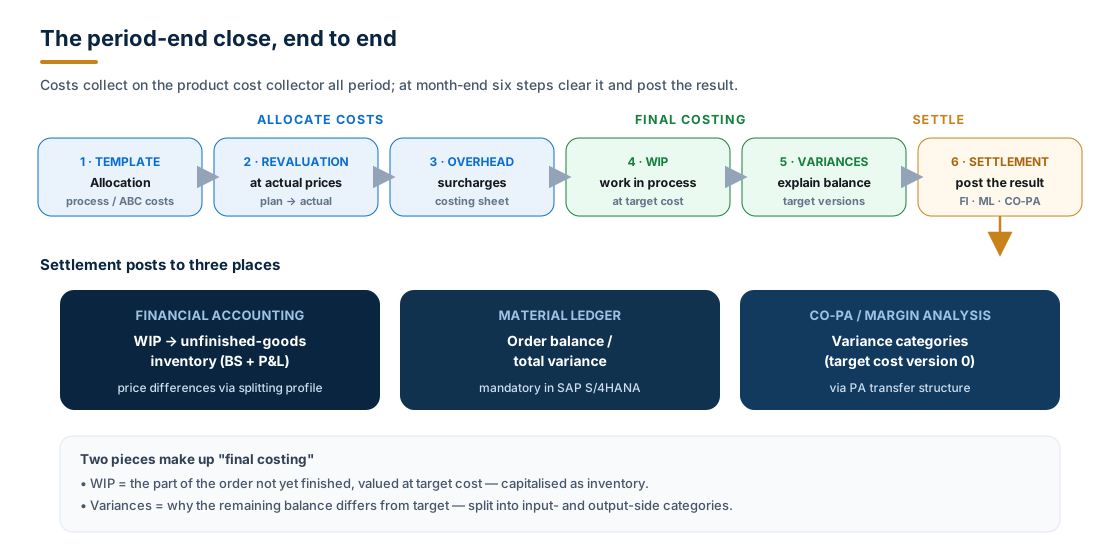
The close in three phases
Allocate costs — bring every relevant cost onto the collector and value it correctly:
- Template Allocation pulls in process and activity costs from Overhead Controlling on a consumption basis.
- Revaluation at Actual Prices re-prices the activities you consumed from plan price to the actual price of the period.
- Actual Overhead Calculation applies the costing-sheet surcharges that can't be charged directly.
Final costing — separate the unfinished from the explained:
- Calculating Work in Process (WIP) values what isn't finished yet — at target cost in this scenario.
- Variance Calculation explains why the rest of the balance differs from target, split into input- and output-side categories.
Settle — post the outcome:
- Settlement moves WIP to FI inventory, books the order balance to the Material Ledger (mandatory in S/4HANA), and sends variance categories to CO-PA.
Where it all lands
After settlement, three modules hold the result:
- Financial Accounting — WIP becomes unfinished-goods inventory (balance sheet + P&L); price differences can be split across G/L accounts.
- Material Ledger — carries the order balance / total variance; always active in S/4HANA.
- CO-PA / Margin Analysis — receives the variance categories from target cost version 0.
A neat S/4HANA refinement: the Price Difference Splitting Profile lets you show each variance category (scrap, price, quantity…) on its own G/L account, so the income statement explains why production differed from plan.
The full series
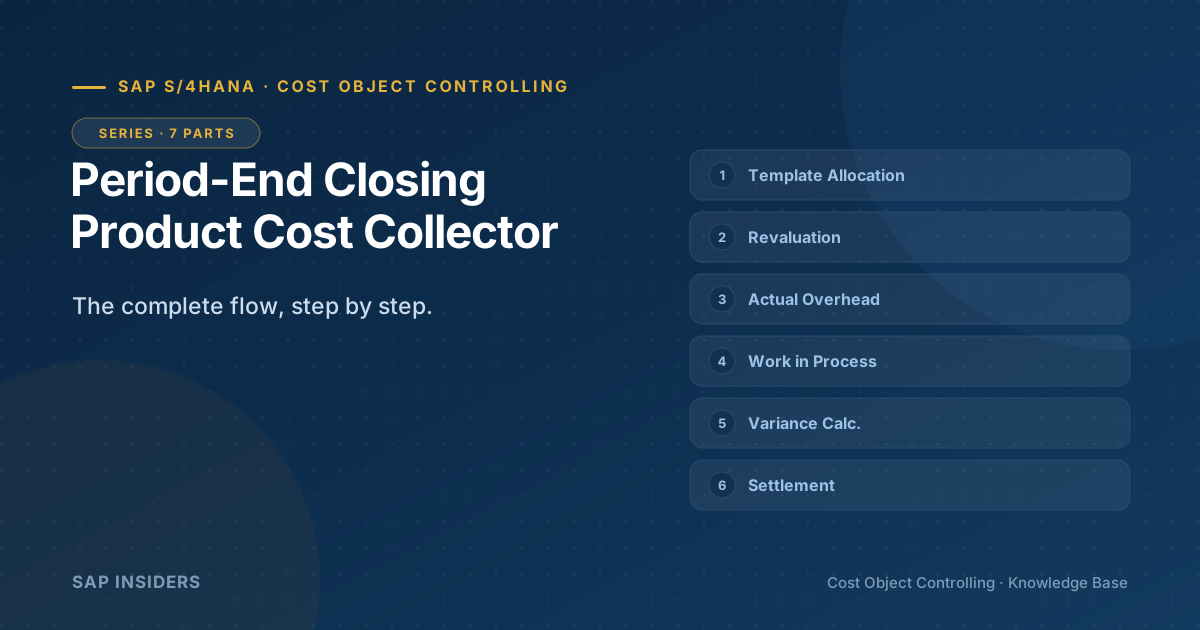
- Overview — you are here
- Template Allocation
- Revaluation at Actual Prices
- Actual Overhead Calculation
- Calculating Work in Process (WIP)
- Variance Calculation
- Settlement
Work through them in order and the close stops being a black box: each step has a clear job, and you can see exactly how a period's production costs turn into inventory, a ledger balance, and a margin story.