Part 5 of the series → start at the Period-End Closing overview.
After WIP is parked, whatever balance remains on the cost object needs an explanation. Variance calculation examines the causes of the order balance — why production cost more (or less) than it should have.
Target cost versions — choose the comparison
A target cost version pairs a control cost with a target cost. The standard system ships four, and only version 0 feeds Financial Accounting (because stock is valued at the standard cost estimate); the rest are additional analysis.
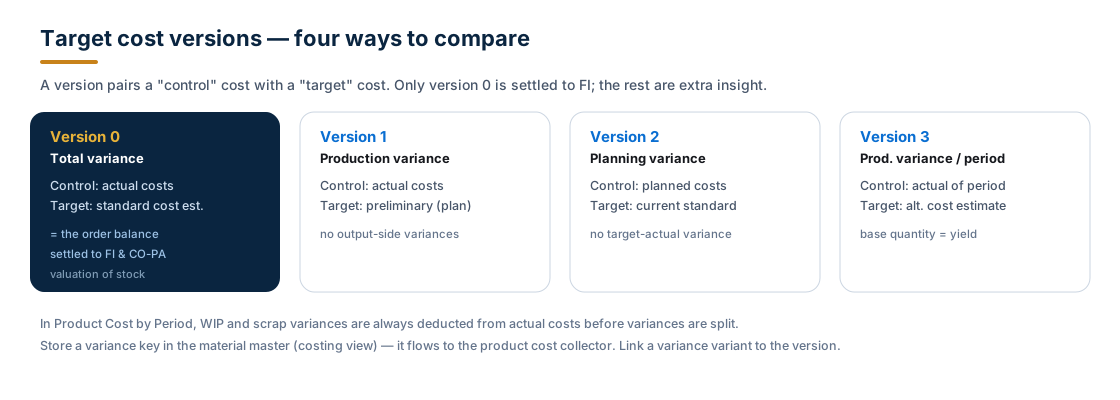
- Version 0 — total variance: actual costs vs the standard cost estimate; equals the order balance and is settled to FI.
- Version 1 — production variance: actual costs vs the preliminary (plan) estimate; no output-side variances.
- Version 2 — planning variance: planned costs vs the current standard; no target-actual variance.
- Version 3 — production variance of the period: period actuals vs an alternative cost estimate, with yield as the base quantity.
In Product Cost by Period, WIP and scrap variances are always deducted from actual costs before the rest is split.
Variance categories — input vs output
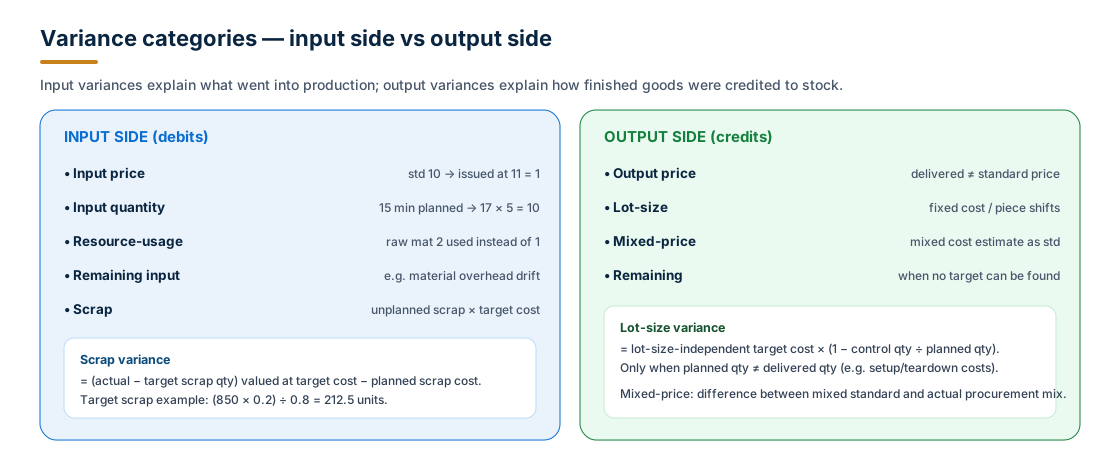
Variances are grouped by where they arise. Input-side categories explain what went into production; output-side categories explain how finished goods were credited to stock.
A few worth knowing by example:
- Input price — raw material valued at 10 in the standard but issued at 11 → variance of 1.
- Input quantity — 15 minutes planned, 17 confirmed at a rate of 5/min → variance of 10.
- Scrap variance — unplanned scrap quantity valued at target cost, less planned scrap cost. (Target scrap example: (850 × 0.2) ÷ 0.8 = 212.5 units.)
- Lot-size variance — lot-size-independent target cost × (1 − control qty ÷ planned qty); only when planned ≠ delivered quantity (e.g. setup and teardown costs).
- Mixed-price variance — arises when a mixed cost estimate becomes the standard price; otherwise it is reported as an output price variance.
Make it work
Variances are only calculated if a variance key sits in the material master (costing view) — it flows to the product cost collector, and can be defaulted per plant in Customizing. A variance variant declares which categories to report and is linked to the target cost version. The valuation variant for scrap is always taken from target cost version 0, and usually matches the one used to value WIP.
Why it matters
Variance calculation is where cost control earns its keep: it turns a single "we overspent" number into specific, actionable causes — a price rise here, a yield problem there — and provides the categories that settlement later carries into the P&L and CO-PA.
The full series
- Template Allocation
- Revaluation at Actual Prices
- Actual Overhead Calculation
- Calculating Work in Process (WIP)
- Variance Calculation — you are here
- Settlement
Next: Settlement →