Part 1 of the series → start at the Period-End Closing overview.
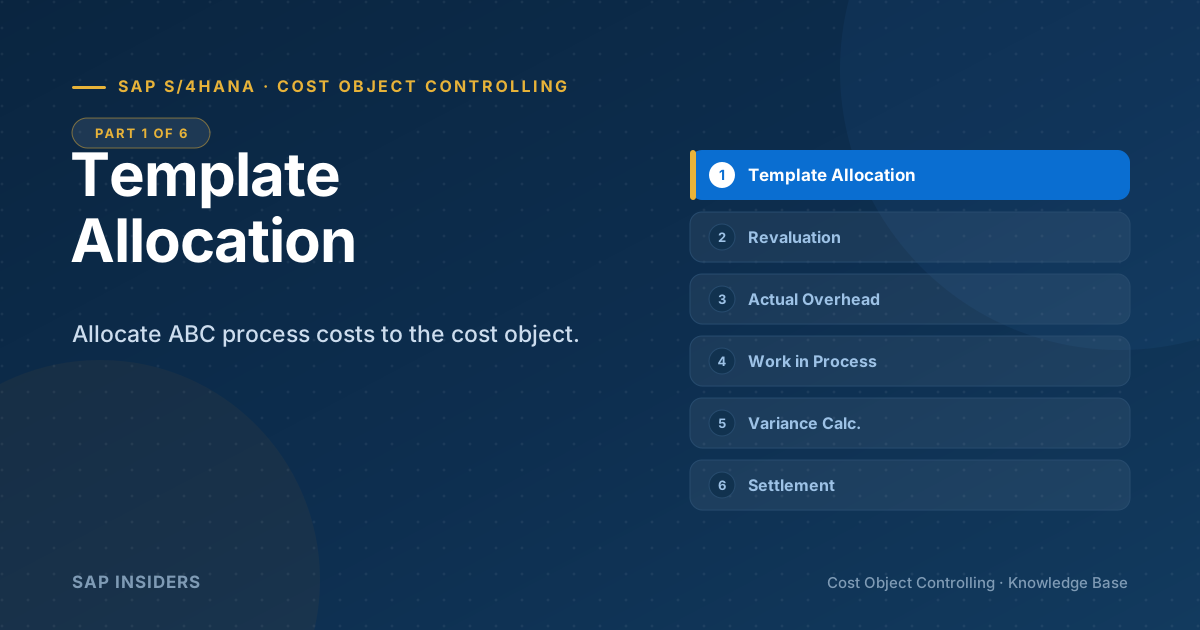
Template allocation is the first allocation step of the close. It transfers costs from Overhead Cost Controlling to other controlling objects based on consumption — most usefully, the process and activity costs that Activity-Based Costing (CO-OM-ABC) tracks on cost centers and business processes.
What it does
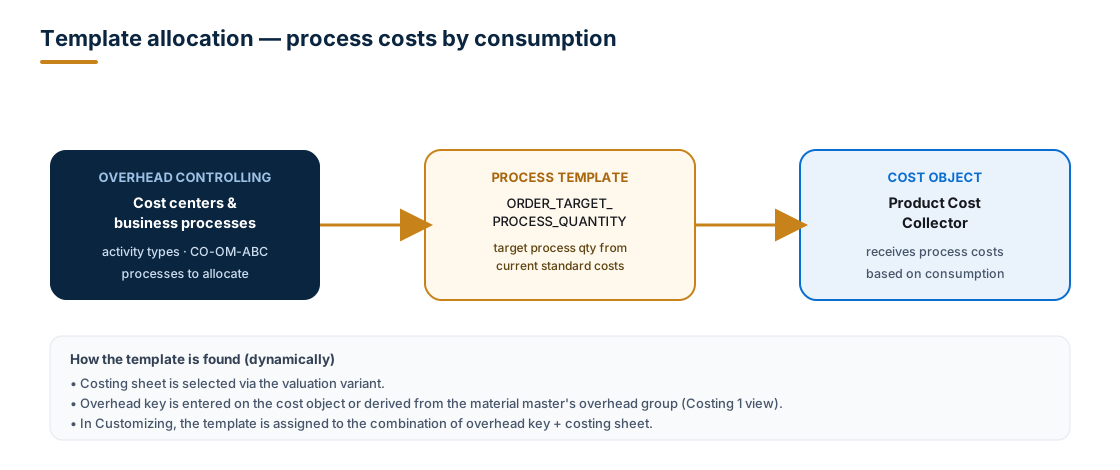
Any controlling object can receive the allocation, but cost objects — like the product cost collector — are the typical receivers. The technique allocates ABC processes using activity types from cost centers, sized to how much each receiver actually consumed.
The clever part is that the template is found dynamically at run time:
- The costing sheet is selected via the valuation variant.
- The overhead key is either entered directly on the cost object or derived from the overhead group in the material master (Costing 1 view).
- In Customizing, a template is assigned to the combination of overhead key + costing sheet.
Inside the template, the function ORDER_TARGET_PROCESS_QUANTITY calculates the actual process quantity, so the system derives target process costs from the current standard costs — consumption-based, not a flat percentage.
Heads-up (older releases): in SAP S/4HANA 1610, template allocation to CO-PA was not available. Allocation to cost objects is the mainstream use.
Why it matters
Direct material and activity postings only tell part of the story. Template allocation is how indirect, process-driven costs (setup coordination, quality, logistics handling) reach the product that caused them — the foundation for an accurate per-product cost before WIP and variances are calculated.
The full series
- Template Allocation — you are here
- Revaluation at Actual Prices
- Actual Overhead Calculation
- Calculating Work in Process (WIP)
- Variance Calculation
- Settlement