Part 2 of the series → start at the Period-End Closing overview.
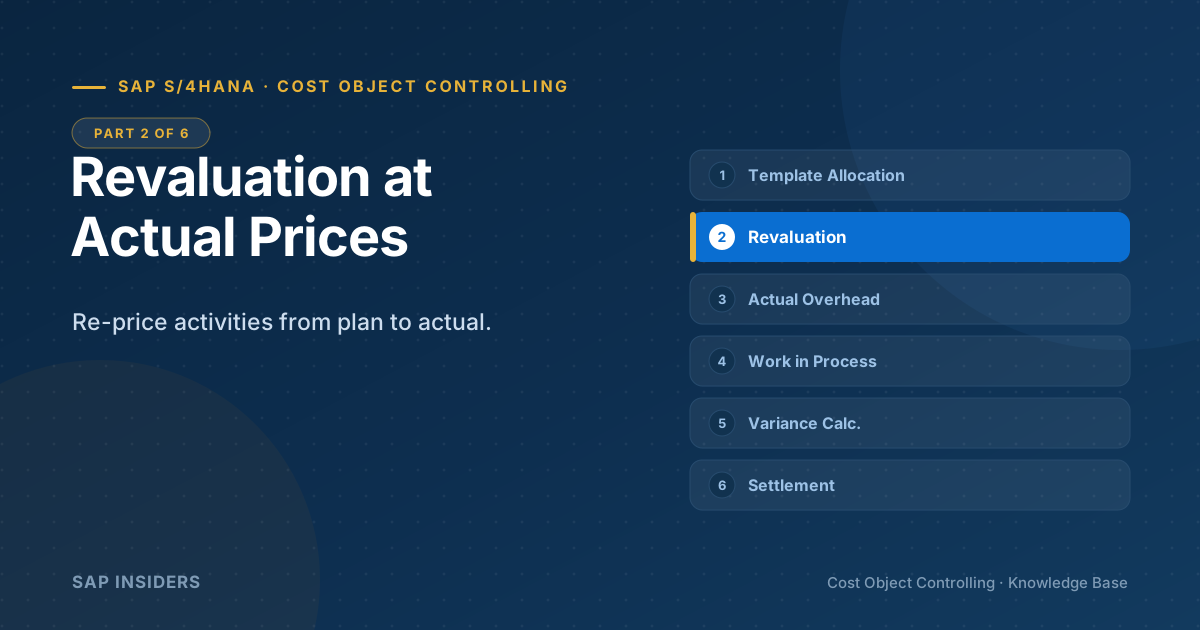
During the period, activities are charged to the cost object at their planned price. But the real cost of an hour of machine time only becomes clear once the period closes. Revaluation at actual prices corrects the gap: it recalculates the actual price of each activity type and business process, then debits or credits the cost object for the difference.
The actual price is simple arithmetic: actual cost ÷ actual quantity consumed.
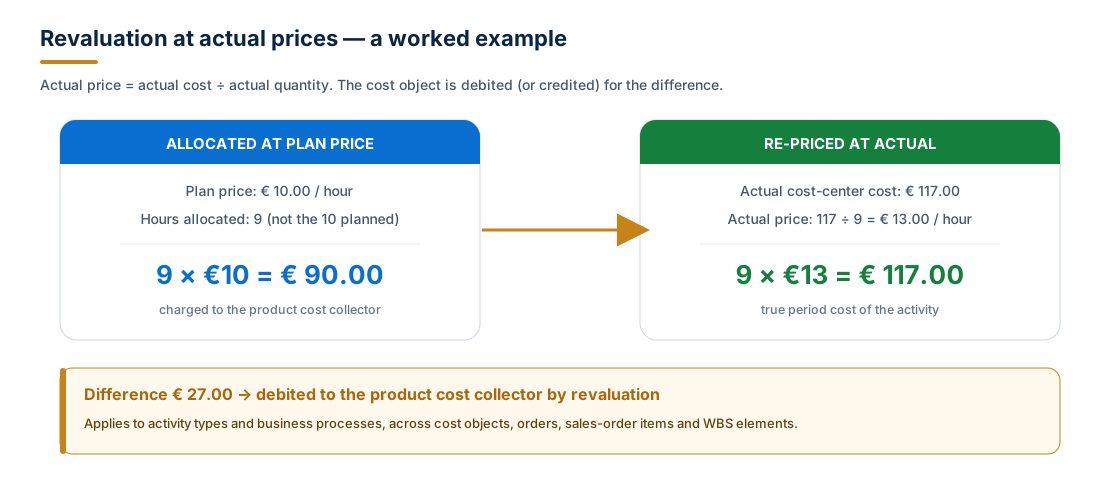
The worked example
- The activity was planned at €10.00 per hour.
- Only 9 hours were allocated (not the 10 planned), so at plan price the cost object carried 9 × €10 = €90.00.
- At period-end, the cost center's total activity cost came to €117.00. Across the 9 hours actually allocated, that's an actual price of €13.00 per hour (117 ÷ 9).
- Revaluation charges the €27.00 difference to the product cost collector.
The same logic applies to business processes, not just activity types.
Where it applies
You control whether revaluation is possible in Customizing — it depends on the actual version parameters for the fiscal year and the activity type's master data. Actual prices are computed in Cost Center Accounting (for activities) and Activity-Based Costing (for processes). You can revaluate across:
- Cost Object Controlling — product cost collectors, production and process orders, sales-order items used as cost objects, internal orders, cost object hierarchies, general cost objects.
- Project System — WBS elements, networks, and network activities.
Why it matters
Without revaluation, your cost objects stay frozen at plan prices and every activity-rate difference hides inside an undifferentiated balance. Re-pricing to actual is what lets the later variance calculation attribute differences to the right causes instead of lumping them together.
The full series
- Template Allocation
- Revaluation at Actual Prices — you are here
- Actual Overhead Calculation
- Calculating Work in Process (WIP)
- Variance Calculation
- Settlement