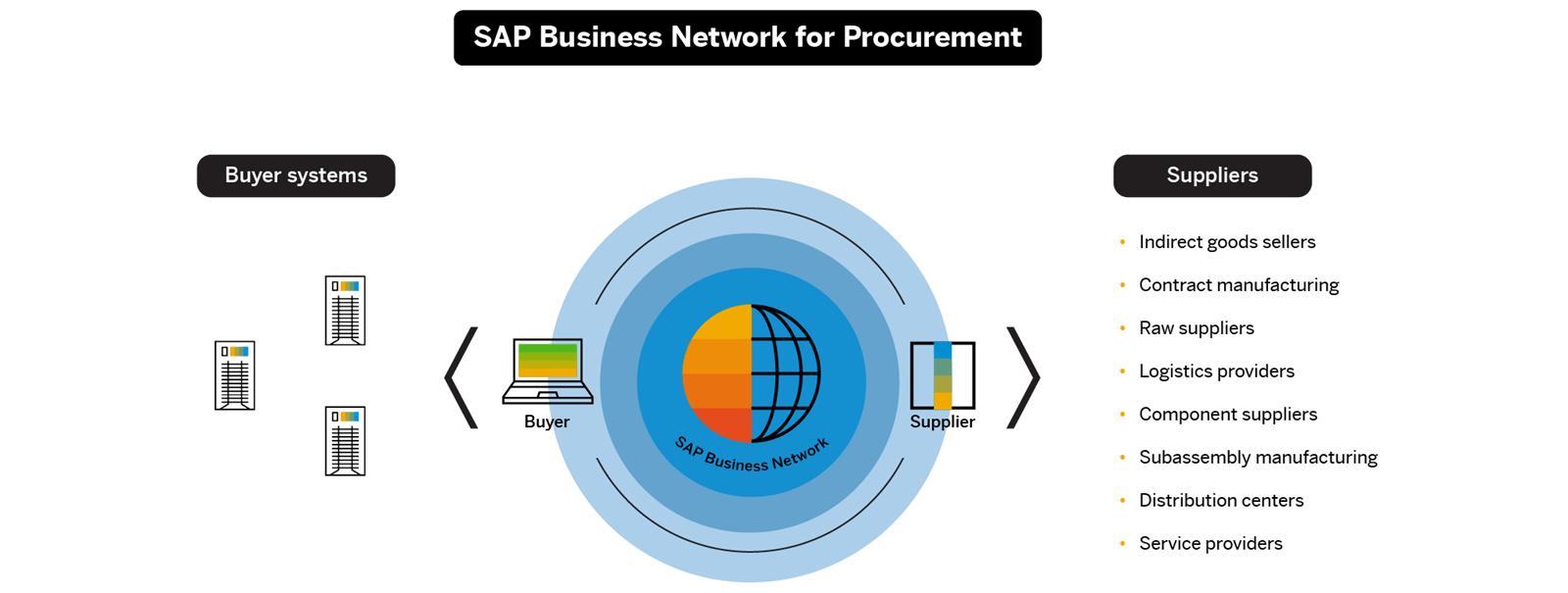
SAP Business Network for Procurement is SAP’s cloud-based digital commerce platform that enables companies to collaborate in real time with suppliers, streamline source-to-settle processes, and drive cost efficiency, transparency, and compliance across the procurement lifecycle — all within a globally connected ecosystem.
It transforms procurement from a transactional function into a strategic value driver, leveraging data, automation, and supplier collaboration to mitigate risk and fuel innovation.
SAP Business Network Trading Partners
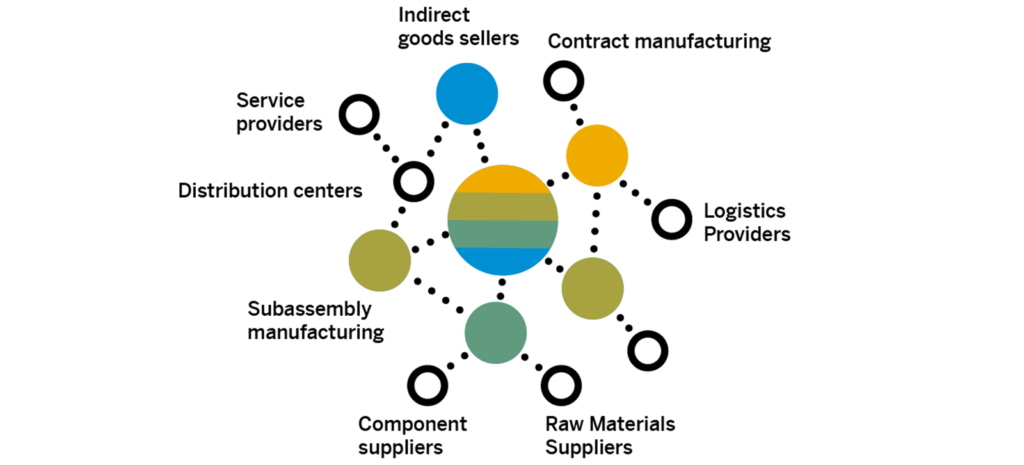
At the center lies the buyer’s enterprise, digitally connected in real time to a diverse web of external trading partners through the SAP Business Network.
Each spoke represents a critical participant in the extended supply chain, including:
- Indirect Goods Sellers – Office supplies, MRO, IT equipment vendors
- Contract Manufacturing – Third-party plants executing full or partial production
- Logistics Providers – Transporters, third-party logistics (3PLs), warehousing agents
- Raw Material Suppliers – Suppliers of steel, chemicals, packaging materials, and more
- Component Suppliers – Tier-1 and Tier-2 manufacturers providing essential parts
- Subassembly Manufacturing – Outsourced production of modules or system-level assemblies
- Distribution Centers – Centralized facilities managing inventory and product dispatch
- Service Providers – Providers of services such as calibration, installation, audits, and maintenance
Typical procure-to-pay cycle executed through the SAP Business Network for Procurement, showing clear buyer-supplier touchpoints and the role of the network in facilitating seamless, real-time collaboration.
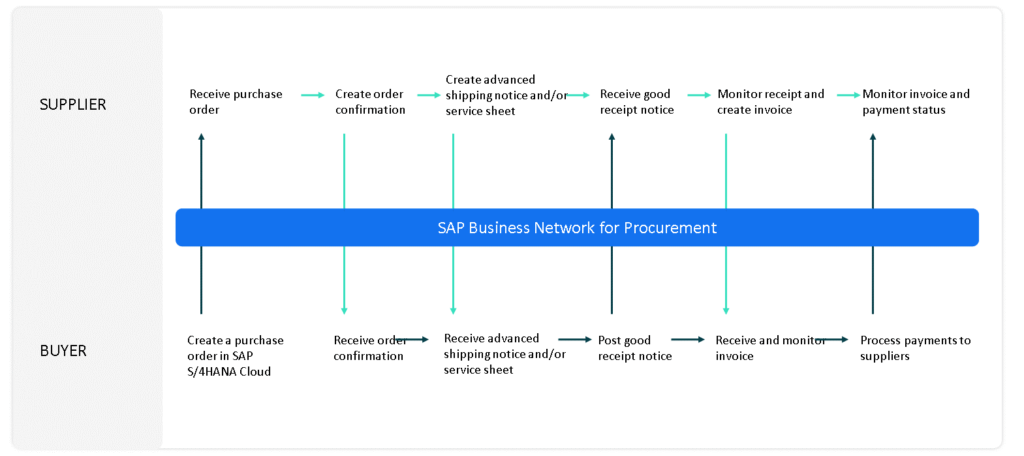
SAP Business Network Supplier Portal. It categorizes them into Outbound and Inbound document flows, depending on whether the document originates from the buyer's system (outbound) or from the supplier (inbound).
Outbound Documents (Sent from Buyer to Supplier):
- Purchase Order
- Good Receipt Notice
- Invoice Status Update
- Service Entry Sheet Status
- Payment Remittance (with status)
Inbound Documents (Sent from Supplier to Buyer):
- Purchase Order Confirmation
- Advanced Shipping Notification (ASN)
- Invoice
- Service Entry Sheet
Implementing the SAP Business Network Supplier Portal requires a coordinated effort from various key roles within your organization, each contributing to the project's success. Here's an overview of these roles, their responsibilities, and practical examples:
1. Project Sponsor (Customer)
- Responsibilities: Owns the project, provides necessary resources, and advocates for its success.
- Example: A Chief Procurement Officer who approves funding and champions the integration of the SAP Business Network Supplier Portal to enhance supplier collaboration.
2. Project Manager (Partner and Customer)
- Responsibilities: Plans, organizes, and directs project tasks, ensuring completion on time, within budget, and scope.
- Example: An IT Project Manager who develops the project timeline, coordinates between departments, and monitors progress to implement the portal.
3. Onboarding Specialist (Customer)
- Responsibilities: Collaborates with trading partners to enable network interactions and drives the organization toward project goals.
- Example: A Supplier Relationship Manager who communicates with suppliers, guiding them through the portal registration and usage process.
4. Business Process/Integration Expert (Partner and Customer)
- Responsibilities: Drives and influences functional and technical design decisions, focusing on system integration.
- Example: An SAP Consultant who ensures that the portal integrates seamlessly with existing ERP systems, maintaining data consistency.
5. Change Manager (Customer)
- Responsibilities: Assesses the impact of changes on business processes, policies, organization, and end-users; develops and executes change management plans.
- Example: An Organizational Development Specialist who creates training programs and communication strategies to facilitate user adoption of the new portal.
6. Buyer Account Administrator (Customer)
- Responsibilities: Manages and maintains buyer accounts within the SAP Business Network, ensuring accurate information and assisting in onboarding new resources.
- Example: An IT Administrator who sets up user accounts, assigns roles, and resolves access issues related to the portal.
7. Customer Success Partner (SAP)
- Responsibilities: Supports the delivery of services and monitors client satisfaction.
- Example: An SAP representative who regularly checks in with the customer to ensure the portal meets their needs and addresses any concerns.
8. Business Network Enablement Lead (SAP)
- Responsibilities: Oversees overall project planning, organization, execution, and ensures knowledge sharing on trading enablement.
- Example: An SAP Lead who coordinates between the customer's team and SAP resources to ensure alignment and effective implementation.
9. Business Network Buyer Integrator (SAP)
- Responsibilities: Provides support on technical design decisions and is involved in configuration and testing of the solution.
- Example: An SAP Integration Specialist who assists in configuring the portal settings and conducts testing to validate functionality before going live.